
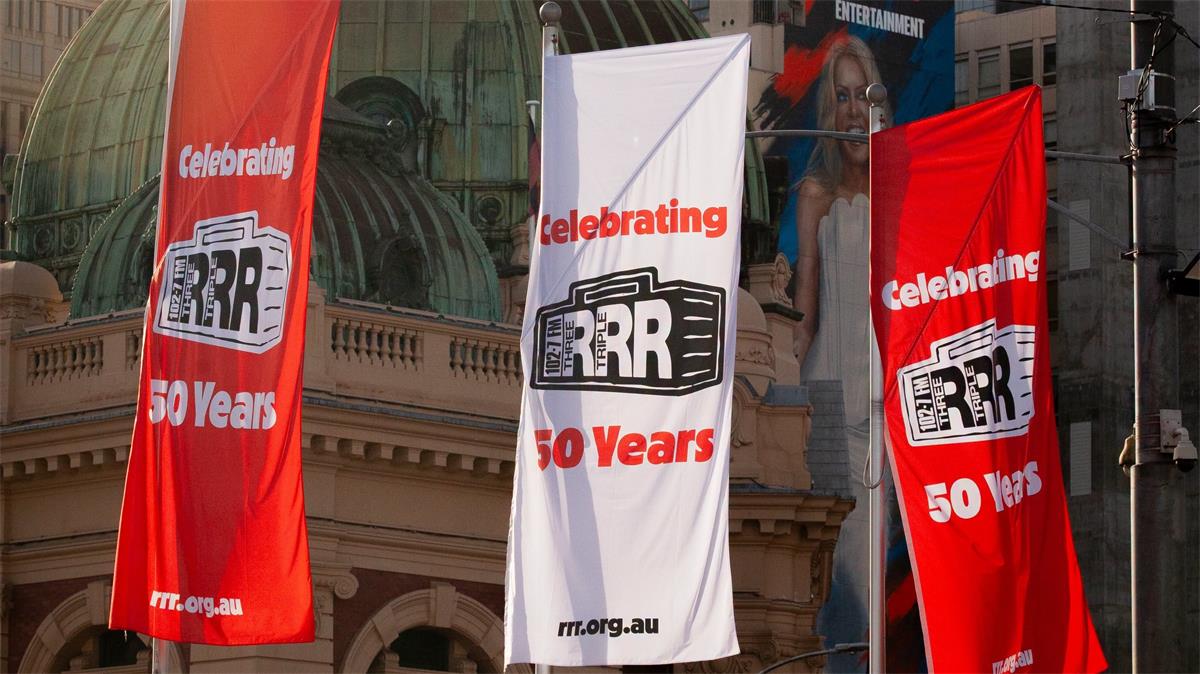
The CBAA sends its warmest congratulations to Triple R, which turns 50 today. Melbourne’s independent community radio station officially celebrates its birthday on Tuesday 17 November. For five decades, it has been one of the clearest examples of what community broadcasting can achieve.
From student station to Melbourne institution
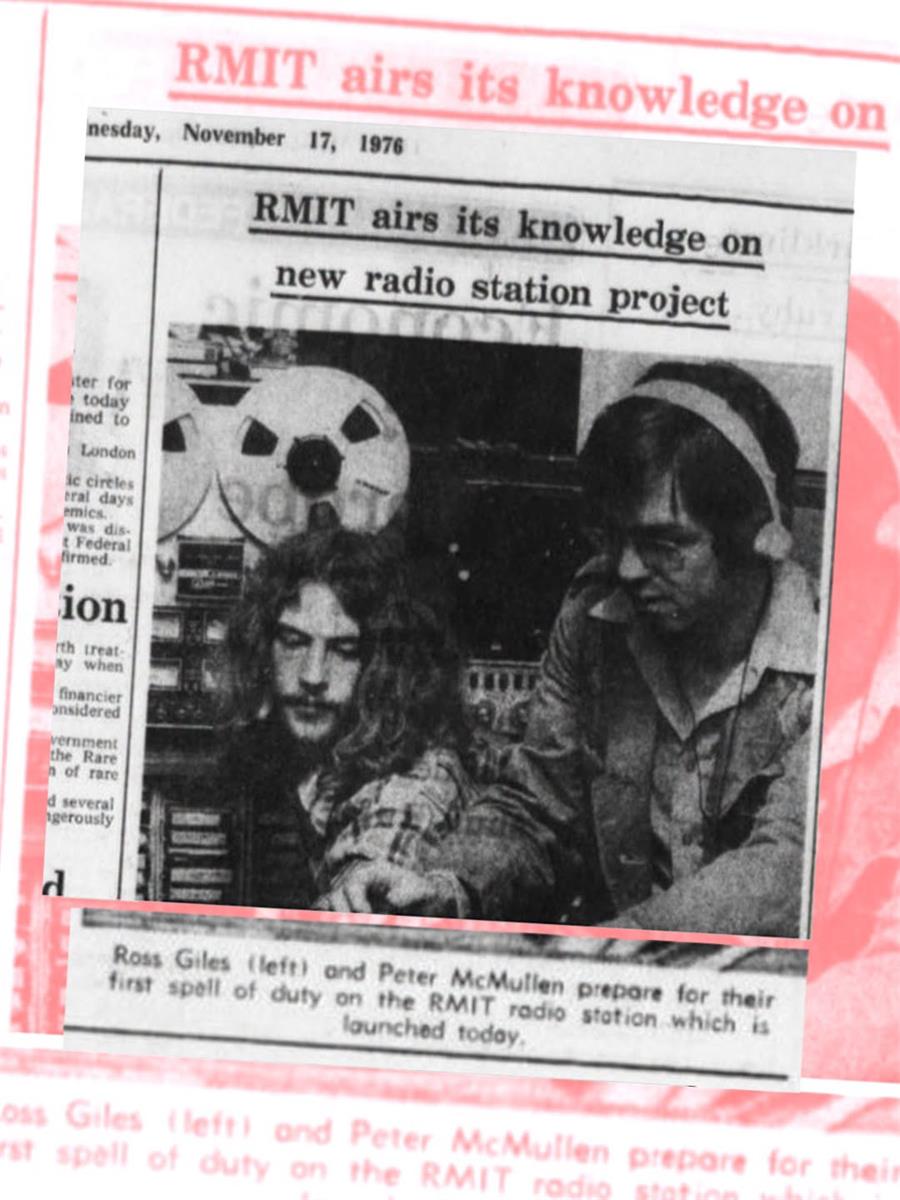
Triple R began as an RMIT student station, with a focus on education and on giving local artists a platform. It first went to air in 1976 from the studios of 3ST, RMIT’s student radio station, under an educational licence and the name 3RMT. In 1979 it moved to Fitzroy and took on the name 3RRR.
In its feature for Bandcamp Daily, Jimmy Trash writes about the station’s early years. Sue Mathews, the station’s first manager from 1977 to 1981, helped set its founding principles, including open training for anyone who walked in the door. When a later conservative government went after the station’s funding, listeners and local bands answered with a run of fundraisers. Out of that came the radiothons and subscription drives Triple R pioneered, which helped the station get past early debt and licensing troubles. Community stations across the country still use that model today.
Built by volunteers and listeners
Triple R is now based in Brunswick East, in a former lingerie factory. Veteran broadcaster Neil Rogers told the ABC that having a building of its own is one of the station’s greatest achievements. Almost every program is presented by volunteers, and the station is funded mainly through sponsorship and subscriptions. It has 17,000 paid subscribers and broadcasts to more than 1,000,000 listeners a month across FM, DAB+, podcasts and online.
The station’s commitment to local music is as strong as ever. The ABC reports that Triple R recorded 500 interviews with local artists last year, and about 75 per cent of the tracks it plays are by Australian artists. Over the years its airwaves have featured everyone from Midnight Oil and Hunters and Collectors to Courtney Barnett, Amyl and the Sniffers and Sampa the Great.
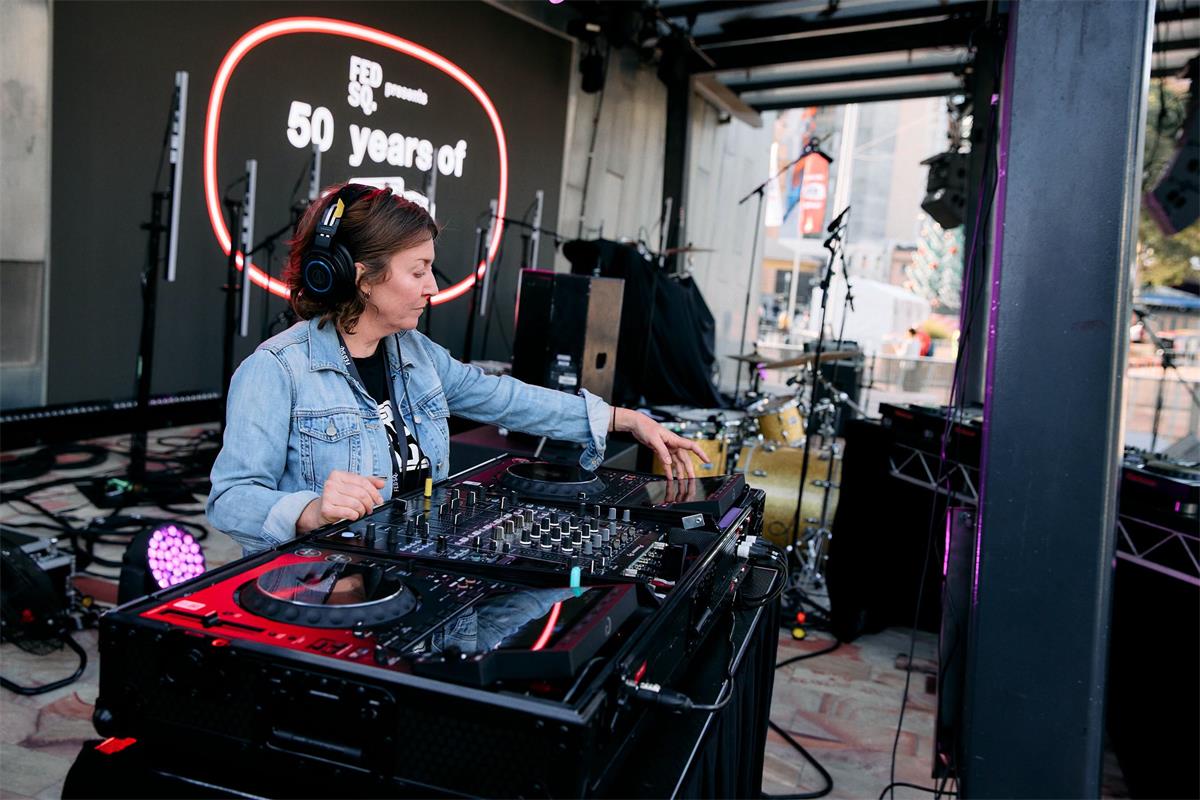
A Triple R DJ at their 50th birthday celebration in Federation Square. Photo by Thomas Breakwell.
Celebrating the milestone
To mark the anniversary, Triple R has been airing 50 Years in 50 Days, a series compiled by former Breakfasters host Chris Hatzis. Each episode covers one year of the station’s history. The final episode goes to air today, the station’s official birthday.
The National Film and Sound Archive has also joined the celebrations. For the anniversary, NFSA curator Crispian Winsor has picked 20 items from the national collection that capture what makes the station unique. The first item is a clip of former Whitlam government minister Dr Moss Cass, who talks about his part in approving Australia’s first community radio licences.
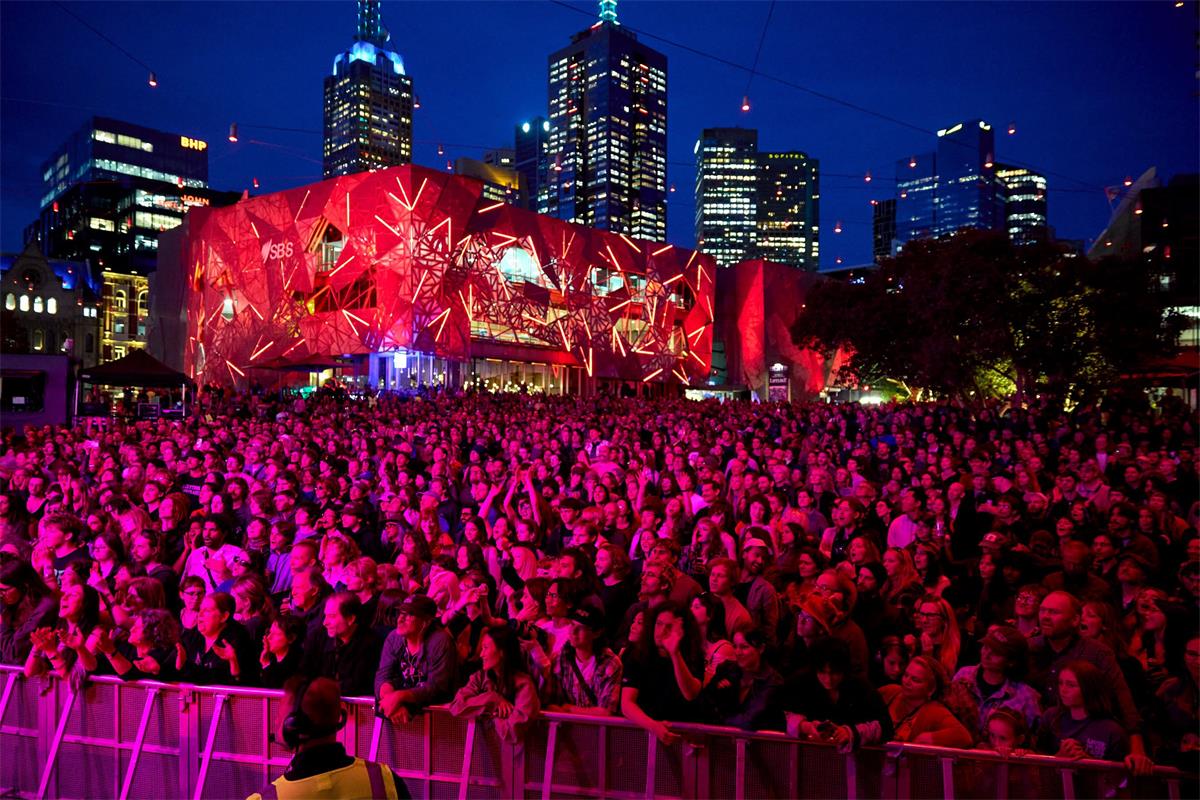
The crowd at the Triple R 50th birthday celebration in Federation Square. Photo by Thomas Breakwell.
Part of a proud class of 1976
Triple R isn’t the only community broadcaster reaching 50 this year. Several stations went to air in 1976, in the early days of community radio licensing.
- 2MCE, Bathurst: 2MCE was the first non-metropolitan community radio station on the FM band. It was one of 12 educational licences granted by the federal government, and it launched on 8 May 1976.
- 2XX, Canberra: 2XX first went to air on 2 July 1976. Canberra Museum and Gallery marked the milestone with an exhibition, 2XX People-Powered Radio: Celebrating 50 Years.
- 3CR, Melbourne: 3CR began full-time broadcasting in July 1976, and celebrated its 50th with a free birthday party at Collingwood Town Hall.
- Curtin FM, Perth: Curtin FM began on 16 October 1976 as 6NR. It was Western Australia’s first community station and the first new station in Perth in 35 years, and it was home to Australia’s first Noongar radio program.
Congratulations to all of these stations and to the generations of volunteers who have kept them on air. Together, their stories show how far community broadcasting has come since 1976.
Happy birthday to everyone at Triple R: the staff, the board, the subscribers and the volunteers who have supported the station for 50 years. Here’s to the next 50!